
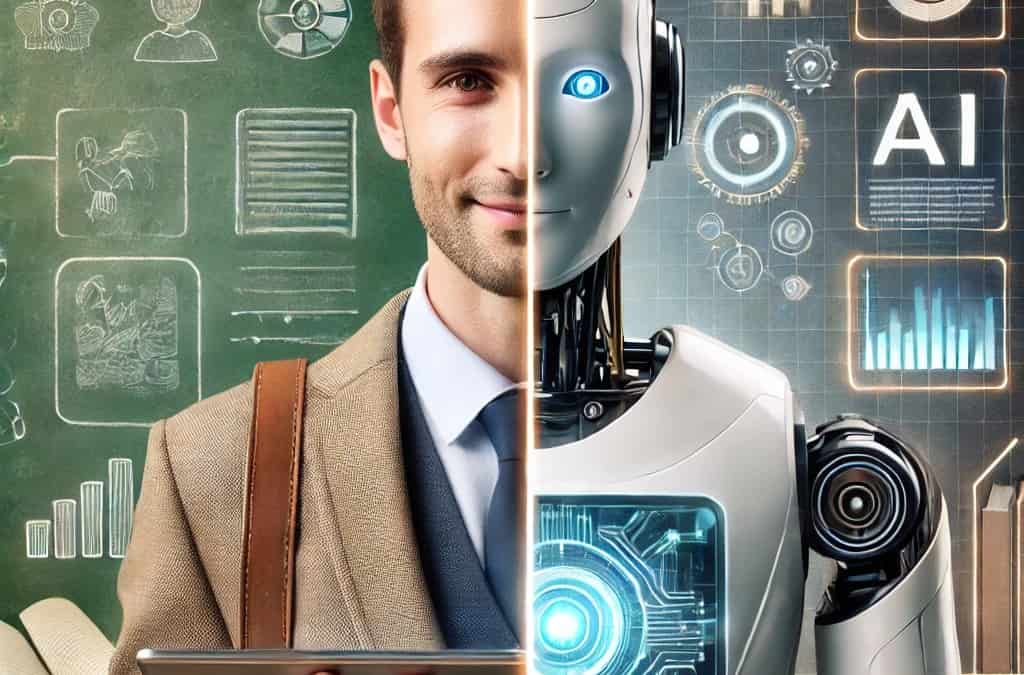
Tech influencers have undergone a profound transformation in how they operate—one enabled not by traditional tools like cameras and microphones, but by artificial intelligence. In 2026, AI is no longer a supplementary creative tool for content creators; it has become essential infrastructure that shapes workflows, accelerates production, enhances personalization, and ultimately determines competitive advantage. Understanding how influencers leverage AI reveals both the practical mechanisms of modern content creation and the strategic imperatives driving adoption.
The Transformation of Content Creation Workflows
The most visible impact of AI adoption among tech influencers is dramatic acceleration of content production timelines. Creators using AI tools report 40% faster content creation cycles and 18% higher engagement from AI-optimized posting schedules. This efficiency gain isn’t merely about speed—it fundamentally changes the economics of content creation, allowing solo creators and small teams to produce output that once required entire production departments.
Consider the video production landscape: Mootion, one of the leading AI video platforms, generates a complete three-minute video in under two minutes, compared to the industry average of six minutes—a 65% speed improvement over competitors. This speed advantage compounds across a creator’s annual output. If a creator produces 40 videos monthly, AI tools can reclaim hundreds of hours annually that can be redirected toward strategy, community building, and higher-value creative decisions rather than mechanical production tasks.
Yet this acceleration comes with a critical caveat. The creators most successfully leveraging AI aren’t simply delegating all creative decisions to algorithms. Rather, they’re using AI to automate the mechanical aspects of creation while retaining final creative control. A tech influencer might use ChatGPT to generate initial script outlines, Midjourney to create visual concepts, HeyGen to produce avatar-based video, and Descript to edit and repurpose the final product—but at each stage, the creator applies judgment, refinement, and personalization that preserves authenticity.
Foundational AI Tools for Different Creation Stages
Modern tech influencers operate within an increasingly sophisticated AI toolkit, with different tools addressing distinct creative needs.
Ideation and Script Development
The foundation of quality content creation is often the hardest part: generating fresh ideas and structuring them into compelling narratives. ChatGPT serves as a foundational ideation partner, helping creators overcome creative blocks by generating topic suggestions, developing outlines, and drafting initial scripts based on creator input.
For creators seeking more specialized support, Jasper focuses specifically on brand-consistent, long-form content generation, maintaining a creator’s distinctive voice across multiple pieces. Copy.ai and similar platforms excel at generating variations—multiple script versions with different tones (humorous, inspirational, direct) that creators can test with audiences.
What distinguishes these AI writing tools from earlier automation software is that they’re designed for creator collaboration, not creator replacement. A tech influencer enters the key points they want to cover, the audience they’re addressing, and their desired tone—and the AI generates a first draft. The creator then refines, personalizes, and optimizes until it reflects their authentic voice.
Visual Creation and Design
While text-based tools handle written content, visual creation represents another critical frontier. Midjourney allows influencers to rapidly generate scroll-stopping visuals and on-brand covers without requiring professional design skills. Canva democratizes design further, offering template-based workflows with integrated AI features that let non-designers create professional graphics at scale.
For video-specific visuals, iMini AI positions itself as a unified platform combining multiple AI image and video models, reducing the need to switch between tools. Its “Inspiration Community” feature—a library of trend-driven templates reflecting current social media aesthetics—accelerates ideation by showing creators what’s working in real-time across platforms.
Video Production at Scale
Video generation represents perhaps the most dramatic AI capability advancement. The top platforms serve different creator needs:
- Mootion: Best for creators wanting complete video stories from single prompts, handling planning, voiceovers, composition automatically.
- Reelmind.ai: Specializes in hyper-realistic AI avatars with auto-scripting and natural voice synthesis, ideal for creators wanting consistent digital personas.
- Synthesia: Excels at rapid, multilingual video production—over 100 languages with regional accents, essential for creators seeking global reach.
- HeyGen: Optimized for speed and simplicity, offering 300+ voices and a user-friendly interface ideal for solo creators producing high volumes of content.
The significance of these tools extends beyond convenience. They enable solo creators to maintain production frequency that would otherwise require hiring videographers, editors, and post-production teams. A single influencer can now produce 2-3 high-quality videos daily if desired, using a combination of AI video generation, audio synthesis, and automated editing.
Analytics and Optimization
The final critical category involves understanding audience response and optimizing content strategy. Taplio provides LinkedIn-specific AI for content ideas, scheduling, and performance analytics. HypeAuditor offers 100% AI-powered influencer discovery and analysis for brands seeking partnership. Audiense digs into social media audience intelligence, identifying psychographic patterns and niche communities that human analysis would miss.
These analytics tools serve a crucial function: they transform content creation from intuitive art into data-informed practice. Rather than guessing optimal posting times, creators receive algorithmic recommendations backed by historical performance data. Rather than assuming what topics resonate, creators analyze engagement patterns to identify which content types drive highest engagement within specific audience segments.
The Mechanism of AI Enhancement: Personalization at Scale
Beyond workflow acceleration, AI’s most powerful contribution to tech influencers is enabling hyper-personalization at scale—delivering customized content experiences to different audience segments simultaneously. This capability has fundamentally altered influencer strategy.
Historically, influencers created content in one version for their entire audience. An influencer might produce a single technical tutorial that serves everyone equally, regardless of their technical background or learning preferences. In 2026, AI enables that same influencer to generate personalized variations: one simplified version for beginners, one advanced version for experienced practitioners, one focused on business applications, another emphasizing hobbyist use cases—all from a single foundational content piece.
This personalization operates through several mechanisms. First, audience segmentation using AI identifies distinct clusters within an influencer’s followers based on demographics, behavior patterns, content consumption history, and engagement patterns. Rather than generic segments like “young professionals,” AI identifies micro-clusters such as “early-career engineers interested in AI security who engage heavily with case studies and follow similar technical accounts.”
Second, AI-driven content generation creates messaging tailored to each segment’s identified interests and pain points. A marketing automation platform like HubSpot now integrates with HeyGen to generate personalized video content directly within CRM workflows—so different audience segments receive different messages reflecting their specific concerns.
The impact on engagement is substantial: AI-driven personalization increases purchase intent by 42% in influencer campaigns, while AI-optimized influencer content generates 37% higher engagement rates compared to non-optimized approaches. These aren’t marginal improvements—they represent a fundamental enhancement in how effectively influencer content resonates with audiences.
Strategic Content Optimization: Timing, Channels, and Sentiment
Beyond creating and personalizing content, AI enhances the tactical deployment of that content. Modern influencers leverage AI across multiple optimization dimensions.
Posting Time Optimization: Rather than guessing when their audience is most active, influencers use AI tools that analyze follower activity patterns and recommend optimal posting times for each platform. This seemingly simple optimization delivers measurable results—posting time optimization generates +21% reach improvement, representing thousands of additional impressions per post for larger creators.
Multi-Channel Adaptation: AI tools rapidly repurpose content across platforms, recognizing that TikTok, Instagram, LinkedIn, and YouTube require different formats, lengths, and stylistic approaches. Rather than manually recreating content for each platform (a time-consuming task), AI automatically generates platform-optimized variations from foundational content.
Sentiment Analysis: AI monitors real-time audience response to content, tracking not just engagement metrics (likes, comments) but underlying sentiment and emotional response. This enables creators to rapidly understand whether audiences are responding positively or critically, identify misaligned messaging before it spreads, and adjust strategy in real-time.
Addressing the Authenticity Paradox
Despite AI’s powerful capabilities, tech influencers face a critical tension: automation and optimization can potentially erode the authenticity that drives genuine influence. Audiences follow influencers for their unique perspectives, personality, and voice. If that voice becomes visibly processed through algorithmic optimization, the connection breaks down.
The most sophisticated influencers have resolved this paradox through selective, transparent, and creator-controlled AI application. Rather than automating everything and hoping to preserve authenticity, these creators use AI strategically while maintaining manual control over elements that matter most for personality expression.
For example, an influencer might use AI to generate script drafts but personally refine them to inject humor, personal anecdotes, and distinctive voice characteristics that would be lost in pure AI generation. They might use AI to handle repetitive optimization tasks like scheduling, analytics, and hashtag research—work that requires no creative input—while reserving human judgment for strategic decisions about messaging, positioning, and narrative.
This balanced approach demands what one research analysis terms “creator collaboration” throughout AI-assisted workflows. Rather than AI generating finished content, AI generates options and first drafts that creators then shape. This preserves the opportunity for authentic voice expression while capturing efficiency gains.
The data suggests this balanced approach works. While 97% of brands, 96% of creators, and 87% of publishers use AI in some capacity, 92% of brands still prioritize authentic human influencers alongside AI optimization, indicating that audiences haven’t abandoned human creators for pure AI—they’ve simply adjusted to expect creators using AI wisely.
The Emerging AI Influencer Stack
As of 2026, a standard AI toolkit for tech influencers has crystallized, exemplified by recommendations like the “LinkedIn Creator Stack”:
- ChatGPT for initial ideation, hooks, and content structure
- Midjourney for scroll-stopping visuals
- Perplexity AI for research and trend validation
- Jasper for brand-consistent long-form content
- Descript for video and podcast editing and repurposing
- Taplio for platform-specific scheduling and analytics
- Notion AI for workflow planning and content systems
This isn’t a random collection but a deliberate workflow: research feeds into ideation, ideation feeds into content creation, creation is optimized through analytics, and everything is organized through planning systems. The workflow is integrative—each tool’s output becomes another tool’s input, creating force multiplication where 1+1=3 rather than 2.
Performance Metrics: Quantifying AI Impact
The return on AI investment for tech influencers manifests across multiple measurable dimensions:
Efficiency gains lead the metrics: creators report 40% faster content production cycles, with some citing the ability to save 20+ hours weekly through AI automation (equivalent to 80+ hours monthly or 960 hours annually). For a creator operating as a solo business, this efficiency gain is equivalent to hiring a part-time content assistant without the payroll burden.
Engagement improvements follow: AI optimization generates 37% higher engagement rates and 42% higher purchase intent compared to non-optimized approaches. These engagement gains compound across an influencer’s content library—if an influencer posts 3 times weekly, a 37% engagement lift means thousands of additional interactions monthly.
Attribution clarity represents perhaps the most underappreciated AI contribution: AI-powered attribution models improve ROI accuracy by 27%, finally connecting influencer activity to measurable business outcomes. Traditional metrics like reach and impressions tell marketers “how many people saw this” but not “how many converted as a result.” AI attribution answers that critical question.
Performance prediction enables proactive optimization: Rather than waiting weeks to assess campaign results, AI can forecast which creators, formats, and channels will likely outperform before campaigns conclude, enabling real-time adjustments that maximize results.
The Emerging Challenge: Platform Integration and Ecosystem Evolution
In 2026, the competitive advantage increasingly goes to platforms that architect AI-native ecosystems rather than retrofitting AI into existing tools. TikTok, Instagram, and YouTube are actively integrating AI directly into creator workflows, making AI tools native to the platform experience rather than third-party add-ons.
This shift matters because native platform integration enables seamless data flow—analytics feed directly into content optimization, audience insights integrate with recommendation algorithms, and creator tools connect directly to viewer data. A creator using platform-native AI doesn’t need to manually transfer data between separate tools; the platform handles integration automatically.
This evolution also means that platform choices increasingly determine creator toolkit. A creator optimizing exclusively for TikTok benefits from TikTok’s native AI optimization more than from third-party tools, creating competitive advantages for creators whose content strategy aligns with platform-native capabilities.
The Future: From Vanity Metrics to Business Outcomes
Perhaps the most significant shift AI is enabling involves evolution from vanity metrics to precision business metrics. For years, influencer success was measured by likes, comments, and follower count—metrics that were easy to track but loosely connected to actual business outcomes.
By 2026, this is changing. “Likes” and “comments” are becoming recognized as primitive, top-of-funnel indicators, while the real strategic value of influencer content is measured through attribution models that track influence all the way through sales funnels and to actual customer lifetime value.
This shift demands that influencers and brands invest in AI-powered analytics that can connect influencer activity to downstream outcomes. A creator can now demonstrate precisely how their content influenced customer decisions—not through correlation, but through sophisticated multi-touch attribution modeling that accounts for multiple influencer touchpoints and their cumulative impact on conversion probability.
Conclusion: AI as Competitive Infrastructure
For tech influencers in 2026, AI adoption has moved from optional enhancement to competitive necessity. The influencers maintaining relevance and growth are those who’ve integrated AI strategically into workflows—using AI to automate mechanical production tasks, optimize performance through data, personalize content at scale, and measure impact with unprecedented precision.
Yet the influencers achieving the greatest impact haven’t abandoned authenticity for efficiency. Instead, they’ve used AI’s power to preserve their unique voice while scaling their reach. They’ve recognized that AI handles execution while humans provide judgment, strategy, and authentic voice expression. By combining these complementary capabilities, tech influencers in 2026 are producing better content, reaching larger audiences, and proving measurable business impact in ways that would have seemed impossible just years earlier.
The future belongs not to creators who use AI most aggressively, but to those who use AI most intelligently—balancing efficiency with authenticity, automation with creativity, and scale with meaning.