
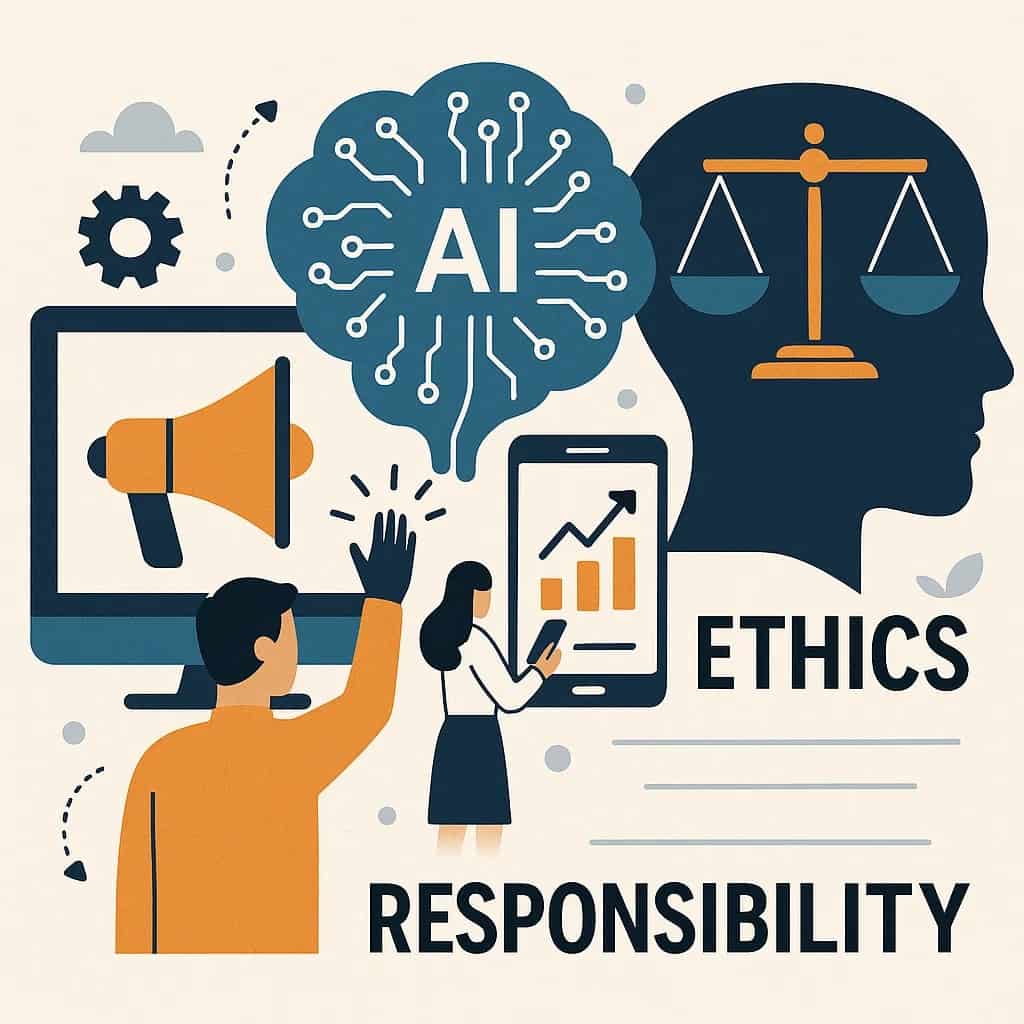
AI ethics and influencer responsibility are becoming inseparable as virtual influencers and AI-generated content spread across social platforms. The central issue is no longer whether AI can create convincing content, but whether creators, brands, and platforms can use it transparently, fairly, and without misleading audiences.
Why This Matters
AI influencers offer brands scale, control, and nonstop engagement, but they also create real ethical pressure around trust and disclosure. Public reaction is mixed: one report found that many people have heard of AI influencers, but far fewer knowingly follow them, and a significant share do not believe a non-human can truly be an influencer. That gap between technological capability and public comfort is exactly where ethics matters most.
As AI becomes more autonomous, the risk is not only that content becomes synthetic, but that audiences may not understand who is behind it. If a virtual creator promotes a product, expresses an opinion, or mimics a human relationship, the line between entertainment and deception can blur quickly.
Transparency First
Transparency is the foundation of responsible AI influencing. Audiences should know when a persona is fully digital, partly AI-assisted, or controlled by a human team. Without that disclosure, trust can erode fast, especially when the influencer appears to be a real person with lived experience.
This is especially important in advertising. If an AI-generated figure is promoting a product, the audience deserves clear labeling so they can judge the message appropriately. In practice, transparency is not just a legal safeguard; it is a trust-building strategy.
Authenticity and Trust
Authenticity remains one of the biggest ethical challenges. Studies and industry commentary suggest that consumers often connect with influencers because they feel real, relatable, and accountable, which makes synthetic personas harder to trust. When audiences suspect a figure is carefully engineered to maximize persuasion, they may feel manipulated rather than informed.
That does not mean AI influencers have no place. It means they must be used with care, especially in niches where trust is central, such as finance, health, education, or product reviews. A virtual influencer can be engaging, but it should not pretend to have real-world experiences it cannot actually have.
Accountability Gaps
One of the hardest ethical questions is accountability. If an AI influencer spreads misinformation, makes a harmful claim, or promotes an unethical product, who is responsible: the brand, the agency, the developer, or the platform? Research and commentary on virtual influencers repeatedly highlight this as a major unresolved issue.
Human influencers can be questioned, corrected, or penalized in ways that are still somewhat intuitive. AI-backed personas are more complicated because responsibility can be diffused across multiple stakeholders. That makes clear governance essential before these systems become even more autonomous.
Bias and Representation
AI influencers can also distort representation. Because they are designed and controlled, they may reproduce idealized beauty standards, narrow cultural norms, or unrealistic lifestyles that would be more obvious if they were human. This can create pressure on audiences, especially younger users who are already vulnerable to appearance-based comparison.
There is also a concern that AI personas may replace real diversity with simulated diversity. A brand can create a visually diverse avatar without supporting actual human creators from those communities, which raises questions about authenticity and inclusion. Ethical use should therefore consider not only whether the persona looks diverse, but whether the ecosystem behind it is genuinely inclusive.
Human Oversight
Responsible AI influencing depends on human oversight. AI should support creative work, not operate without review, especially when it interacts with the public. A human should decide what the influencer says, what claims are safe, what topics are off-limits, and how disclosures are handled.
This is especially important as virtual influencers become more conversational. Research suggests that future AI-backed personas may be able to interact one-on-one with followers, which increases both engagement and ethical risk. The more human-like the interaction becomes, the more important it is to preserve human judgment in the loop.
Rules and Standards
Governance frameworks are likely to expand as AI influencing grows. Broader AI ethics guidance emphasizes transparency, fairness, accountability, privacy, safety, and human oversight as core principles. Those principles already apply well to influencers, even if platform-specific rules are still catching up.
In the future, we are likely to see clearer disclosure rules for AI-generated personas, stronger labeling for synthetic endorsements, and stricter expectations around data use and audience targeting. Brands that adopt these standards early will probably have a trust advantage over competitors who wait for enforcement.
Brand Responsibility
Brands will carry much of the responsibility because they benefit from the influence. If a company creates or licenses a virtual persona, it should be held to the same ethical standard as any other marketing channel, but with even greater attention to clarity and honesty. A polished avatar does not remove responsibility for the message.
The safest path is to design AI influencer campaigns around helpfulness rather than deception. That means avoiding fake claims of personal use, fake social proof, or emotional manipulation that depends on audiences believing the persona is human. Ethical branding is not about limiting creativity; it is about keeping creativity honest.
Table of Risks
| Ethical issue | Why it matters | Responsible response |
|---|---|---|
| Hidden AI identity | Can mislead audiences | Disclose clearly and consistently. |
| False authenticity | Creates fake trust | Avoid pretending to have human experience. |
| Accountability gaps | Harms are hard to assign | Assign legal and editorial responsibility. |
| Bias and idealization | Can reinforce harmful standards | Review outputs for fairness and diversity. |
| Unsupervised autonomy | Increases risk of mistakes | Keep humans in approval workflows. |
What Influencers Should Do
Human influencers also have a responsibility in the AI era. If they use AI to generate scripts, faces, voices, images, or chat interactions, they should be transparent with their audience about what is synthetic and what is genuine. The more trust a creator has built, the more careful they need to be with disclosure.
Influencers should also avoid passing off AI-generated outputs as personal experience when they are not. In tech, lifestyle, finance, and product niches, that matters a lot because audiences often rely on creators for practical judgment. A responsible influencer uses AI to improve workflow, not to fake expertise.
The Likely Future
The future of AI ethics in influencing will likely move toward hybrid models. Human creators will use AI tools to scale production, while virtual personas will become more common in brand campaigns, customer engagement, and entertainment. The ethical challenge will be to keep that growth visible, accountable, and honest.
The good news is that ethical standards are becoming clearer. Transparency, documentation, human review, and responsible governance are not abstract ideals anymore; they are becoming practical requirements for long-term trust. In other words, the future of AI influence will belong to the creators and brands that treat ethics as part of strategy, not as an afterthought.
AI ethics and influencer responsibility will define the next phase of digital marketing. The biggest questions are not just about what AI can do, but what it should do, who controls it, and how audiences are informed. Creators and brands that prioritize transparency, accountability, and human oversight will be better positioned to earn trust in a crowded and fast-changing landscape.